

Joint Effort Masonry Ltd provides specialist stonemasonry and construction services around Glasgow, Central Scotland and Beyond. We dedicate ourselves to providing an outstanding service before, during and after the project. On and off the tools.
Our experienced team of stonemasons, restorers and builders are experts at their craft. Ensuring sympathetic, lasting stone repairs, stone replacements, lime pointing, building and many other construction services. Our qualified professionals always deliver quality work as standard.
Our use of traditional methods and approaches when undertaking specialist masonry work extends to our tools, materials, practices and identity as a company.
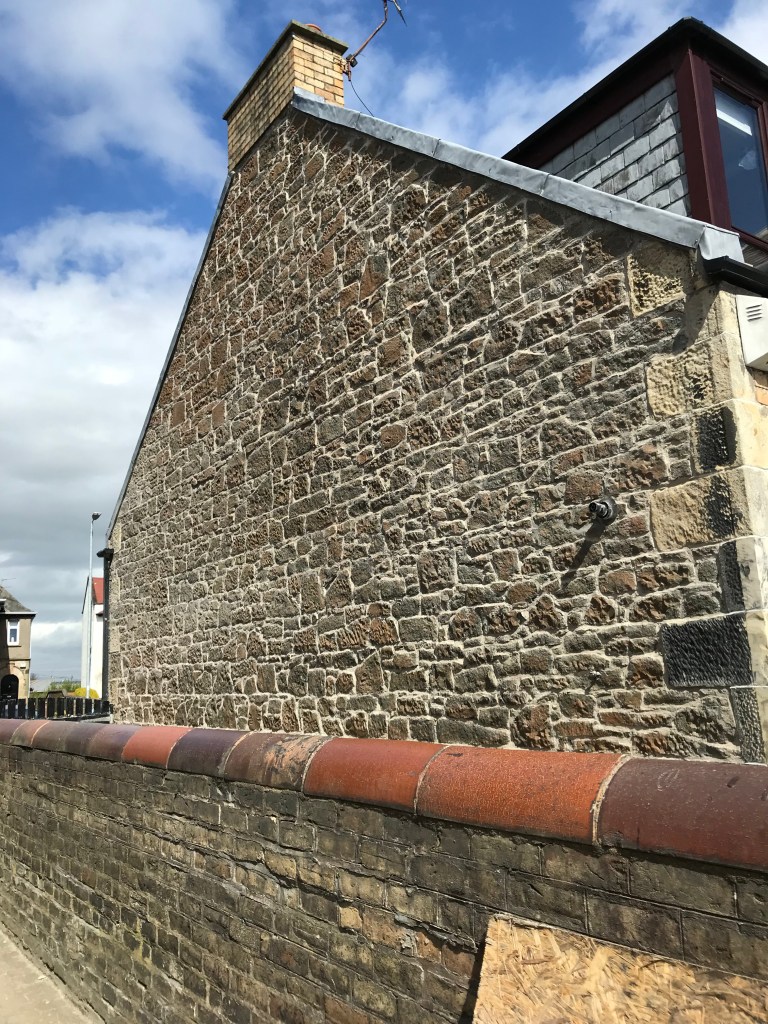


Stone cleaning and lime pointing
Using a variety of methods we can get your stone façade back to looking its best. Always being sympathetic to the existing stone or brickwork we’ll come up with the best way to remove most surface staining or paint from your building.
Why remove paint...
We think all masonry looks best natural and uncovered and the masonry usually agrees. Painting stonework can lead to damp within a stone structure due to trapped moisture. This causes the stone or brick to be permanently soft and susceptible to frost damage during the colder months. Contact us today to find out how we can get your building breathing again.
We carry out plenty of re-pointing work and always use the appropriate lime mortar or material for the masonry at hand. Cement can have its uses but for older masonry units, brick or stone. A lime mortar is always best to ensure the buildings longevity.
Why use lime…
We’ve seen first hand why cement pointing and stonework are not compatible. Eroding edges, soft, spalding, flaky and excessively damp stonework is not good. Our stonemasons have mastered the art of lime pointing and lime mortar stone repairs. We use a variety of natural hydraulic limes, hydraulic limes and natural cements for our building and rendering material.


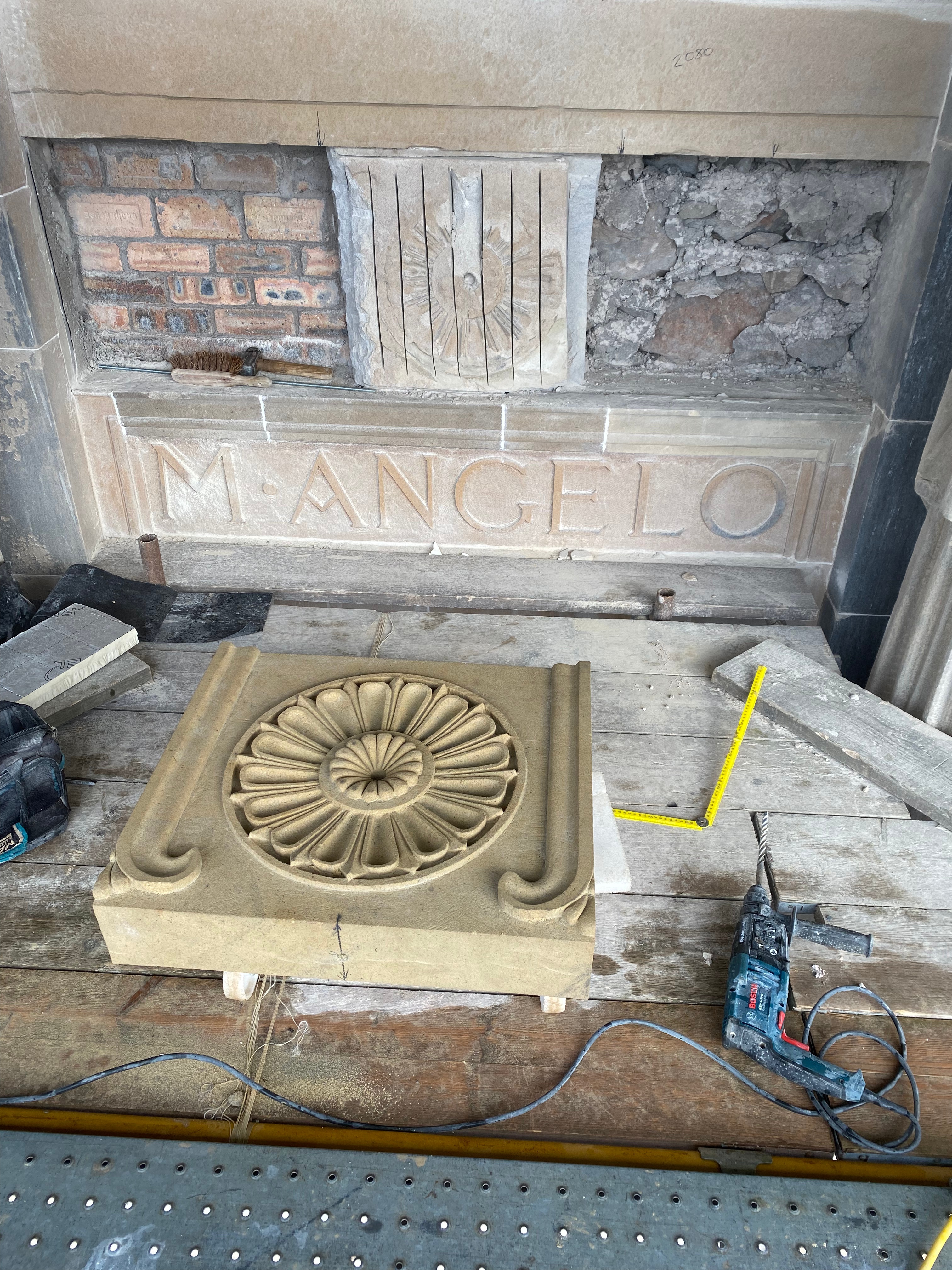
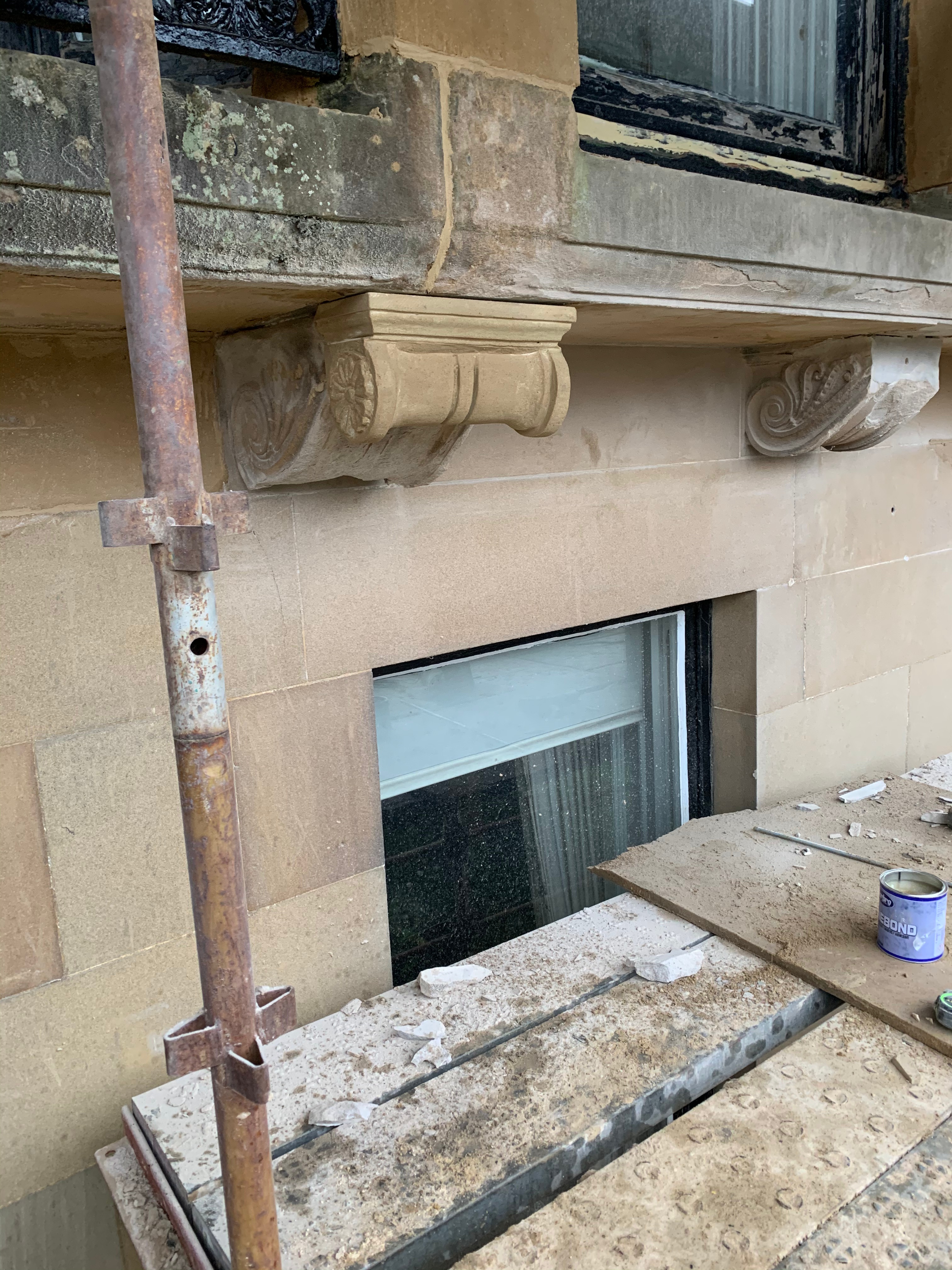
Stone cutting and carving
When a stone is damaged beyond ability to repair the existing, a replacement is usually necessary. We consider all options when deciding the best way to approach fixing your masonry.
What we can do…
We don’t take stone replacements lightly, the big ones in particular. But when there is a need for stone replacement be it your Lintel, Mullions, Sills, Rybats, Quoins, Thresholds, Steps, Fireplaces, Cornices, Jambs, Copes, String Course, Finials or Window Tracery. We can template, replicate, cut out and replace any dressed, molded or carved stonework you require. Find more examples of our work in our gallery
FAQs
What is Stonemasonry work?
Stonemasonry work traditionally was the practice of processing and using stone for building purposes. Originally there would have been different masons for different purposes all working together in the manufacturing process. Typically sawyers, banker/carver masons, fixer masons and tuck pointers. Sawyers would cut the boulders from quarries into slabs, slabs would go to the banker masons to carve and hone to building size, fixer masons would receive the stone to site and build or “fix” them into place eventually finished off by the pointer.
Modern stonemasonry work uses mostly the same process but the stonemason will usually take on more of a general role as banker, fixer and pointer. This has been made possible by the advancement of modern tools meaning a greater ability to work on site and also necessary because of a shortage of skilled workers in this field.
How do you clean stone?
There are a number of ways to clean stonework. Externally being a lot easier than internally as you have the ability to use washers, polishers and chemicals a lot more freely than internally. A hot pressure washer/steam cleaner works best for cleaning stone and brickwork. Chemicals like a biocide or masonry acid can be used (with caution) and with mixed results. In our experience when it comes to cleaning or stripping its the heat that really counts. Softer stonework like sandstone can be damaged by high pressure hoses so always be careful and test an area before trying. Polishing/buffing with a grinder should always be a last resort and make sure to wear the correct PPE.
Why is cement bad for stone?
Portland cement and other manufactured cement are great for use in concrete and only concrete really. Sand and cement mortar used to point sandstone and even most brickwork sets hard and is too impermeable to allow moisture to pass through your masonry units into your pointing and out of the building. This allows your stonework to become soft and permanently damp creating damp issues within the building and also structural issues caused by weak masonry and frost damage in the winter. This combined with the cement pointing in beds and joints being harder than the surrounding masonry means when natural movement occurs the stone and brickwork is put under much more pressure than with a “softer” more flexible and permeable lime mortar, leading to cracked and burst stone and brickwork.
How do you repair a stone?
Sometimes a stone will need a full replacement i.e its cracked beyond repair or eroded to to point where its basically sand. Indenting is the most common way to replace a stone or brick block when required, to do this you will need to cut out the stone to a depth of at least 100mm (further if needed) and then rebuild it with a block sized and cut to measure bedded and jointed with a suitable lime mortar. Always make sure to support stonework above where necessary when removing existing stone.
Repairing a stone face or edge can be done using a decent lime mortar or a pre-bagged lime based repair like Lithomex if you require a specific colour match. Always make sure the stone surface you are applying any lime mortar/stone repair to is wet but not pooling water and really press the stuff in to the substrate at first to achieve the best bond. The easiest method is to put on more than needed, let the mortar/repair partially set and then work/tool it into desired shape. Some repair mortars can be chiselled and tooled into shape after achieving full set too.
 Joint Effort Masonry